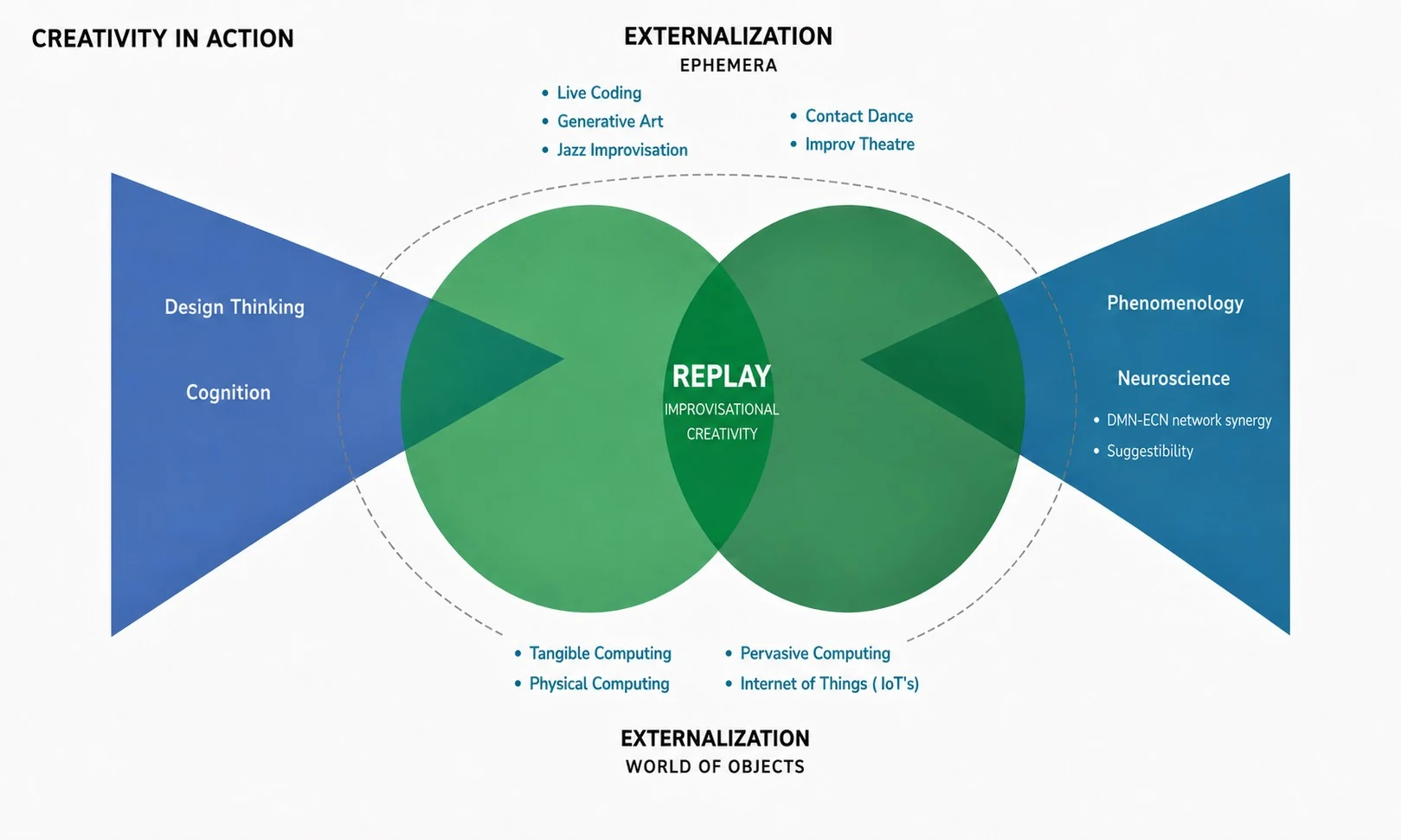
What happens when creativity is understood as something we do together?
My doctoral research at Lancaster University examines creativity as an embodied, relational and socially situated process. It challenges accounts that locate creativity primarily within the isolated individual by studying the role of improvisation, gesture, material experimentation and reciprocal action in collaborative design.
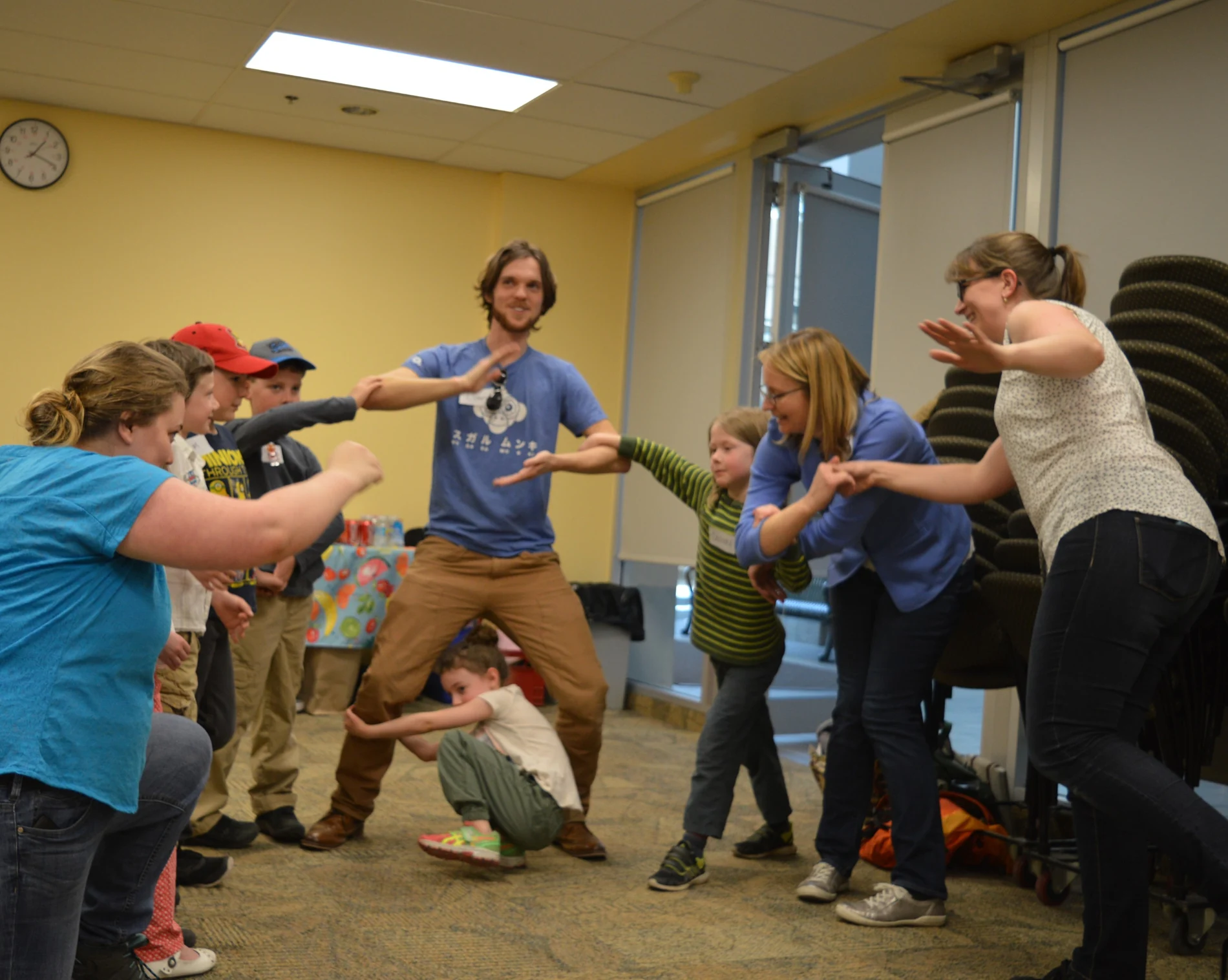
I developed RePlay by adapting principles from improvisational theatre for participatory design and research. It establishes a creative sandbox in which participants can safely test possibilities through playful constraints, movement, performance and reflection.
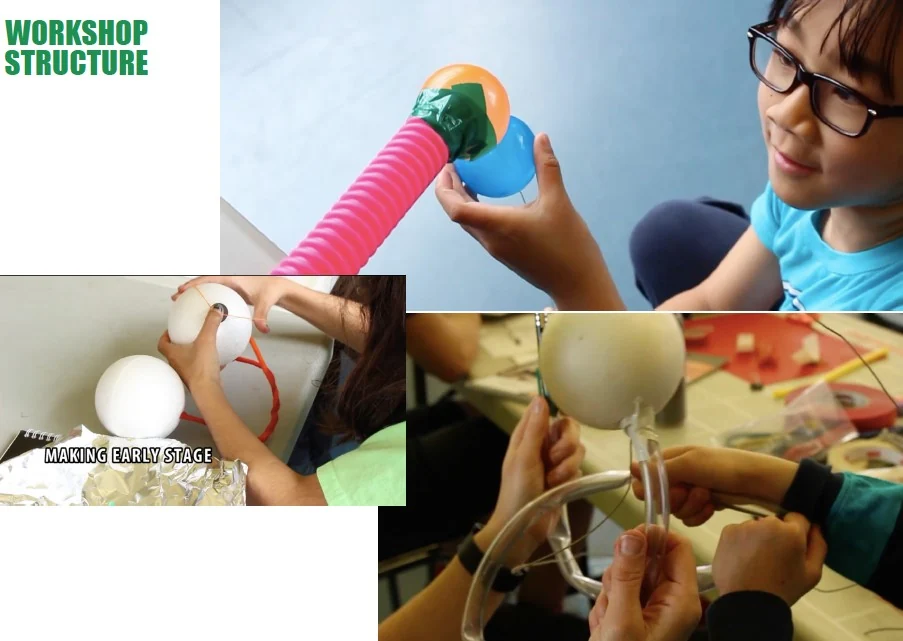
The work draws on international research settings including Tiree Tech Wave in Scotland, Global Studio in Bhopal, India, and the Bendables study in Ottawa, Canada.
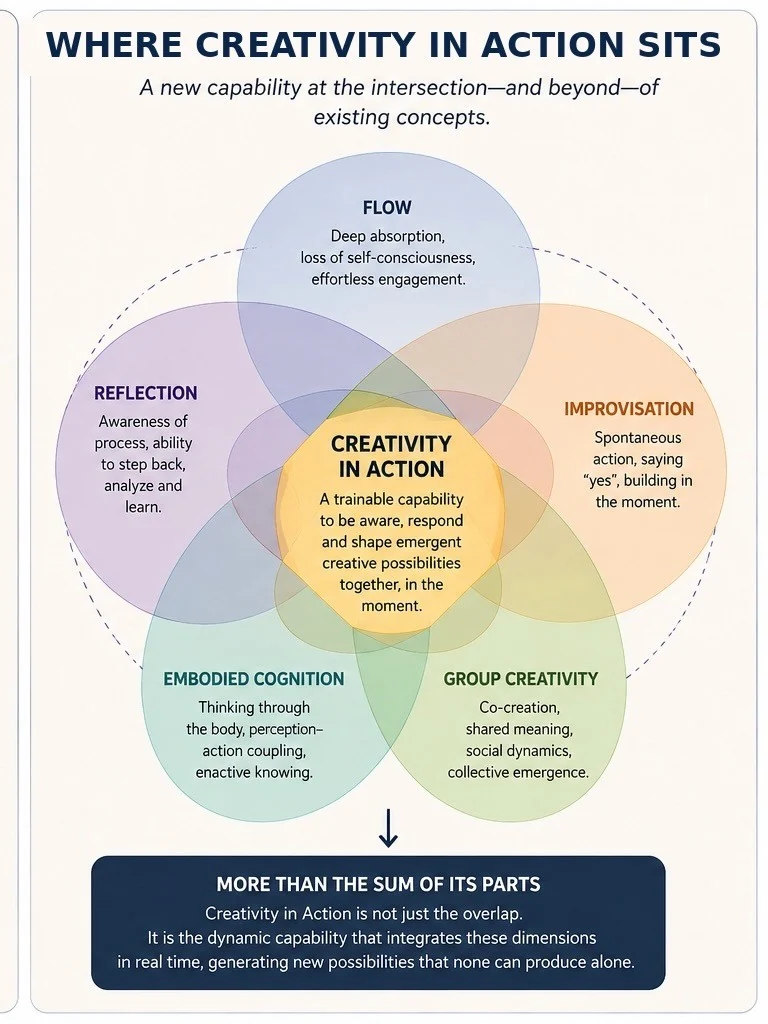
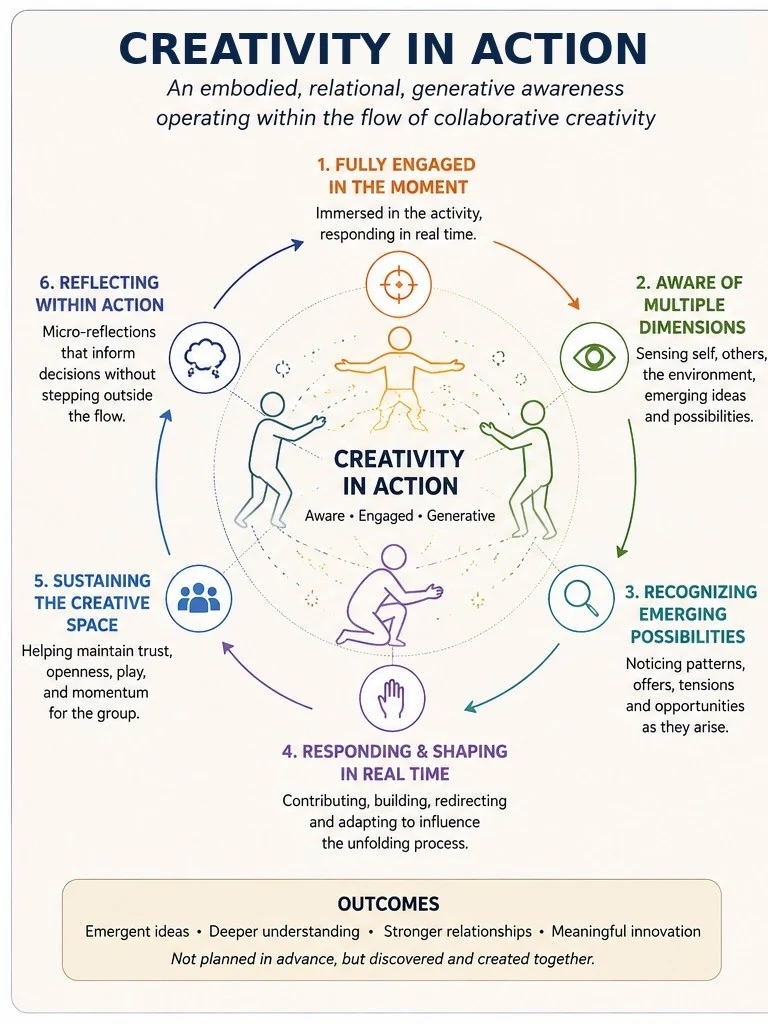
Creativity in Action
Creativity in Action names the cultivated capacity to recognize and respond to emerging creative possibilities in real time through embodied, relational and reflective engagement.
It is not reducible to the novelty of a finished object. It appears in the unfolding process: a gesture that prompts a new thought, the response to another person's offer, the unexpected possibilities revealed by a material, or the timing of a collective shift in direction.
Research through participation
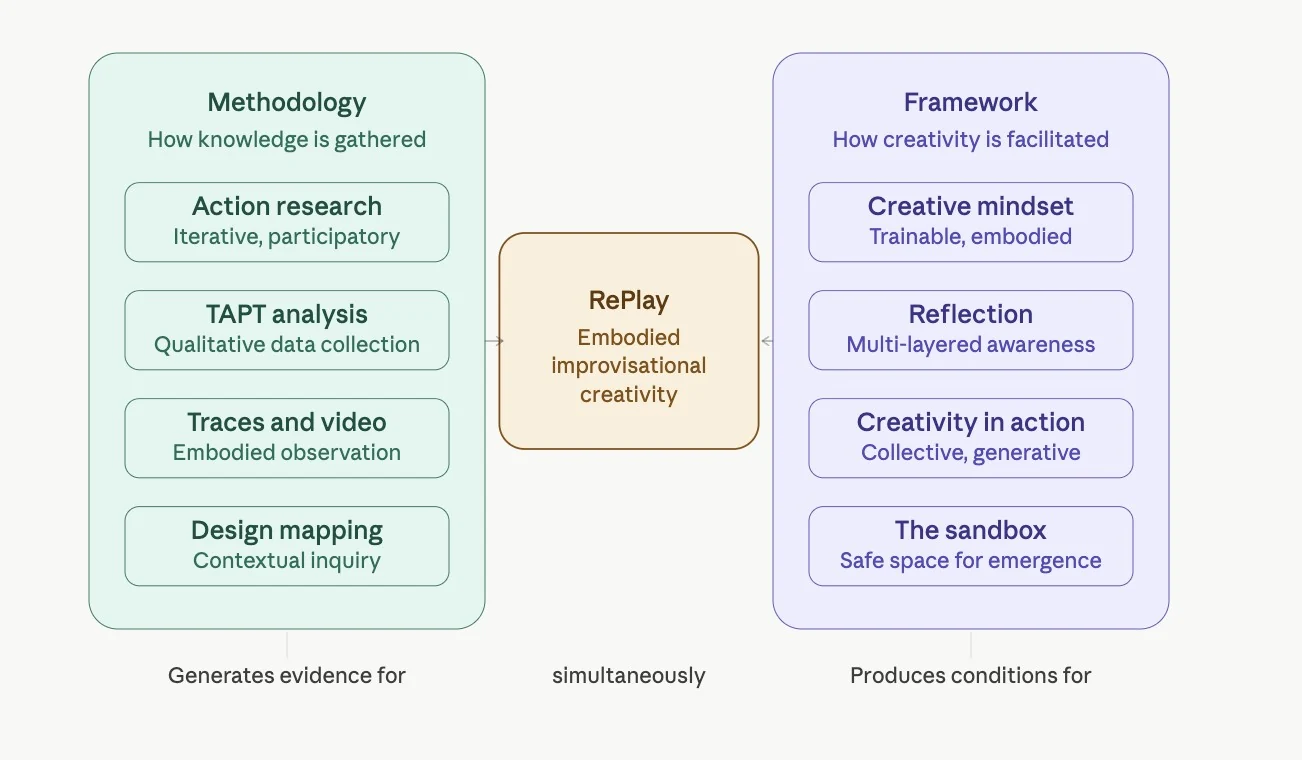
RePlay works simultaneously as a facilitation framework and a way to produce knowledge about creativity. Its studies draw on qualitative documentation—video, traces of activity, participant reflection and experience-analysis methods—to investigate how ideas emerge and change in situated interaction.
The research places particular emphasis on knowledge that conventional interviews or written design methods can overlook: tacit, spatial, bodily and relational knowledge.
From human collaboration to human–AI collaboration
RePlay contributes a practical way to scaffold collaborative creative activity and a conceptual vocabulary for investigating creativity as emergent, participatory and situated. Its attention to bodily action, reflection and the social conditions of participation now informs the design direction of the RePlay Creativity Companion.
Research status: PhD thesis submitted for examination, Computing Department, Lancaster University, October 2026. Degree not yet awarded; awaiting defence, expected completion in 2027.
Download PhD thesis (PDF, 9.4 MB)Related publicationsRePlay Creativity Companion