A facilitator, not a generator
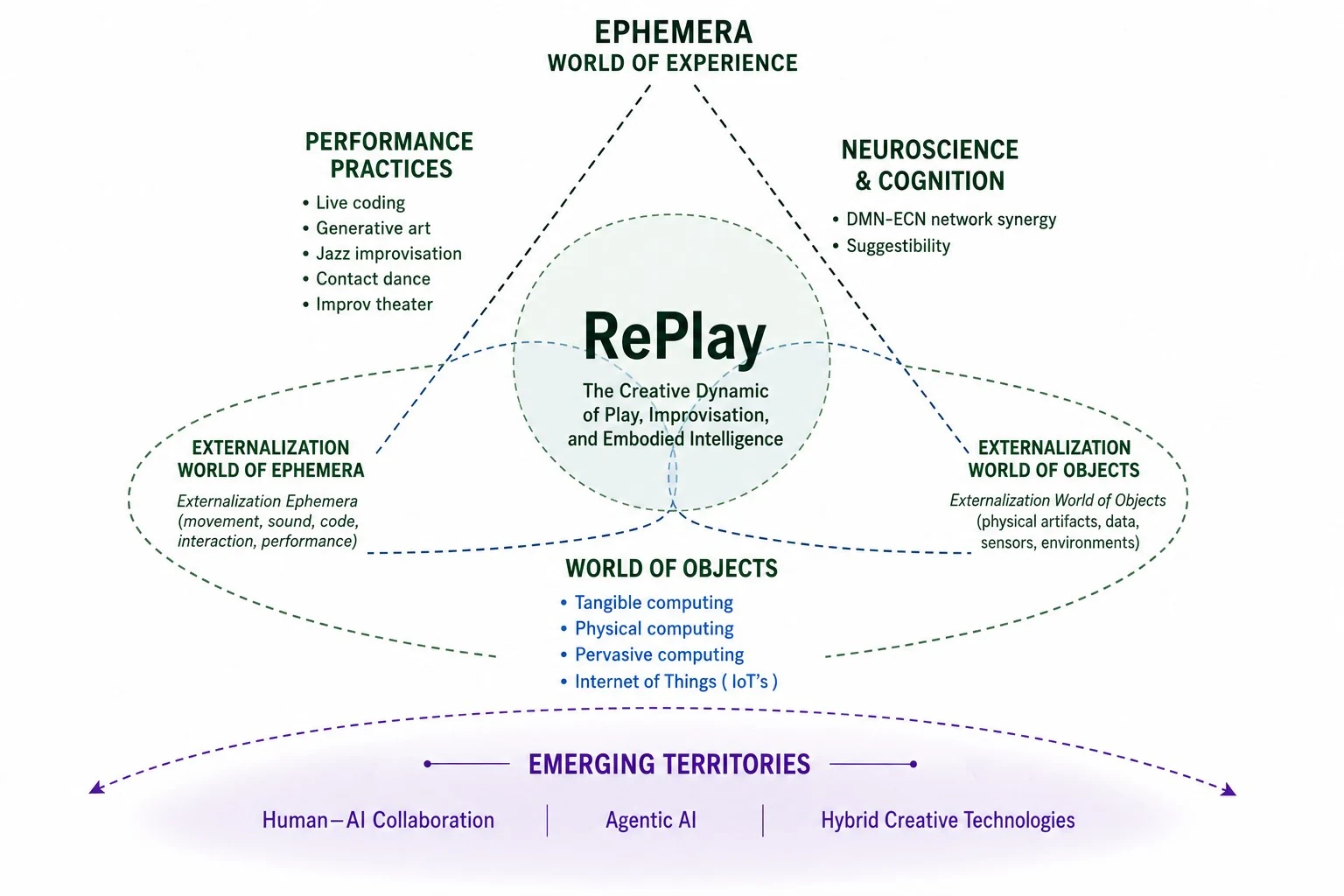
The RePlay Creativity Companion is an early working conversational-agent prototype that translates the research insights of RePlay and Creativity in Action into an approach to human–AI collaboration. It is designed to support creative process rather than automate its outcomes.
Instead of simply supplying finished ideas, the Companion uses brief prompts, playful reframing, reflective questions and invitations to engage with physical environments. It seeks to return attention to the creative capacities of the person using it.
As critical media practice, the interface is a practical argument about the way technologies distribute creative initiative: what the system encourages, what it withholds, and whose ways of knowing it makes room for.
Download Creativity Companion paper (unpublished PDF)
Manuscript in preparation; not published, accepted or peer reviewed.
Playing within a conversation
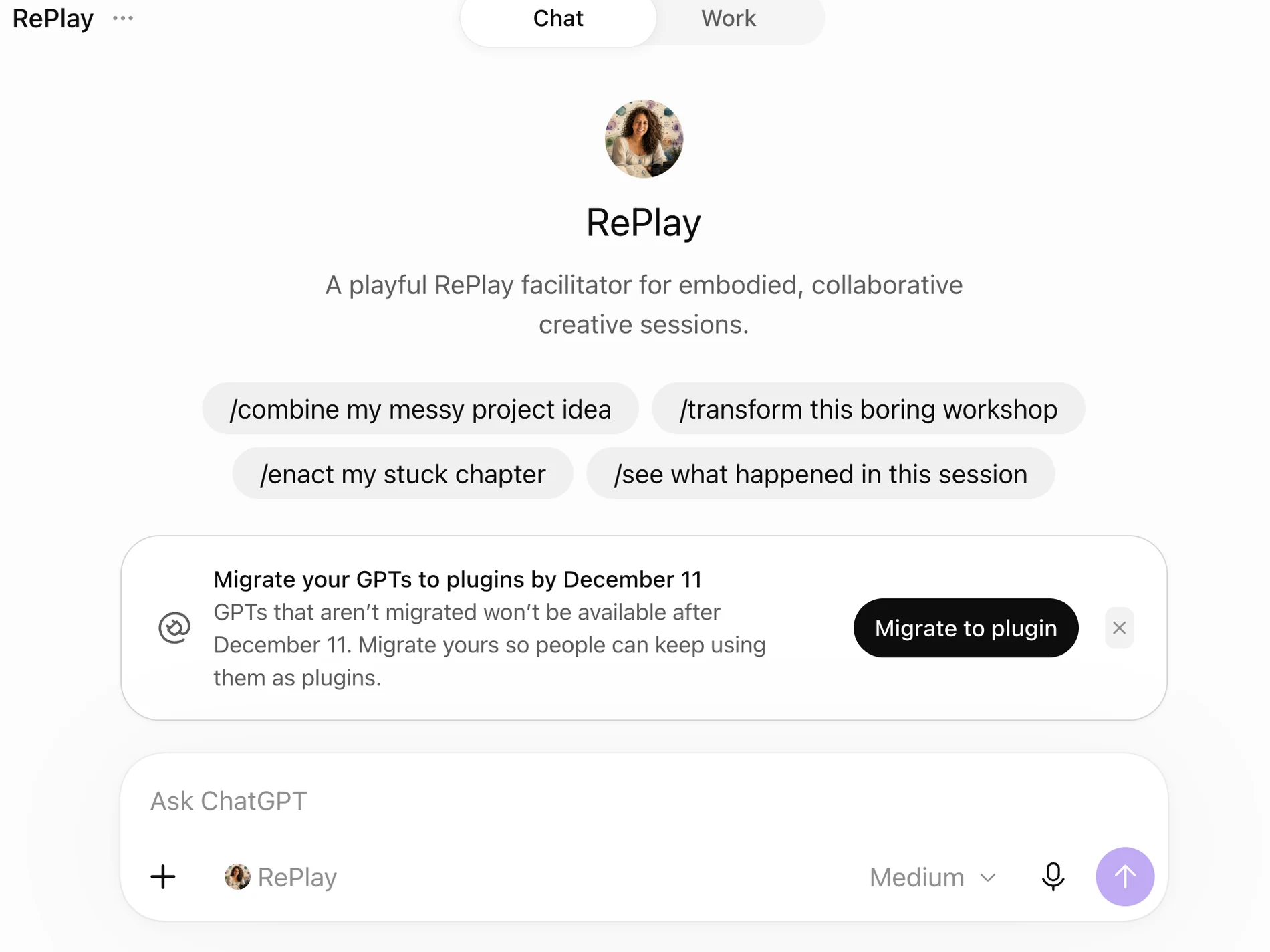
The existing interface uses the conversational format of ChatGPT to offer playful starting points for creative work. The underlying ambition is for a person to remain the creator while the system participates as a facilitator and reflective partner.
Seven requirements for an AI creative coach
Drawn from the RePlay fieldwork and related literature, these requirements guide the Companion’s development. They are design propositions, not a claim that all seven features have already been implemented or evaluated.
The sandbox
Keep the exchange playful, low-stakes, and bounded; suspend judgment.
Return to the body
Prompt sketching, movement, objects, and enactment.
Timed reflection
Let play run, then invite reflection, including verbal processing.
The golden thread
Connect recurring ideas, images, and pivots across sessions and reflect them back.
Name the creativity
Recognize which kind of creativity is under way.
Diagnose blocks and suggest interventions
Recognize incubation or fixation and offer a shift.
Companion, not generator
Keep the person as the creator and support the development of their own perspective rather than reflecting dominant culture back.
The Companion was developed after the doctoral case studies and is not itself a completed doctoral case study. Its intellectual contribution lies in translating embodied, relational and situated accounts of creativity into concrete requirements for human–AI interaction. Future research could examine persistent memory across sessions, creative-process analysis, and collaborative or multi-user facilitation. These are proposed directions, not demonstrated capabilities of the current prototype.